CAL
Correct Calibration
Calibration establishes how the mixer delivers the individual materials used in concrete production.

Volumetric concrete mixers are designed to measure and proportion cement, aggregates, water and admixtures during production, with consistent output depending on correct calibration, material control and mix design.
Understand Mixer AccuracyA correctly calibrated volumetric concrete mixer is designed to control the proportions of cement, aggregates, water and admixtures required by a specified concrete mix design.
Accuracy depends on more than the mixer itself. Correct calibration, material characteristics, production settings and controlled material delivery all contribute to the ability to reproduce the required concrete proportions consistently during production.
Individual materials are controlled against the requirements of the selected concrete mix design.
Calibration establishes how the mixer delivers the individual materials used in concrete production.
Cement, aggregates, water and admixtures need to be controlled in relation to the required mix proportions.
The mix design establishes the required relationship between the materials used to produce the concrete.
Calibration and production checks can be used to assess whether material delivery reflects the intended production setup.
The accuracy of a volumetric concrete mixer therefore depends on how effectively the materials required by the concrete mix design are calibrated, controlled and delivered during production.
wHY DOES cALIBRATION MATTER? ↓CONCRETE ON DEMAND ANYWHERE
Volumetric mixer accuracy can be influenced by changes in material properties, aggregate condition, equipment maintenance and mixer setup. Understanding these factors helps support consistent concrete production and accurate material proportioning.
Changes in cement, aggregates or admixtures can alter material characteristics and affect the relationship between calibration settings and actual material delivery.
Moisture content and aggregate condition can influence material properties and should be considered when checking calibration and production consistency.
Wear, servicing and the condition of material delivery systems can influence mixer performance and the consistency of material output.
Mixer settings and calibration need to reflect the materials and production setup so that the required concrete proportions can be reproduced consistently.
When materials, equipment or production conditions change, calibration may need to be checked again to confirm controlled material delivery.
Calibration & Service →Calibration establishes how the materials used in a volumetric concrete mixer are delivered against the requirements of the selected concrete mix design.
Correct calibration helps the mixer control cement, aggregates, water and admixtures in the required proportions during production.
Measure actual material delivery and establish the relationship between mixer settings and material output.
Use the required concrete mix design to define the proportions that the calibrated mixer must reproduce.
Controlled material delivery supports consistent concrete production in line with the selected mix design.
Calibration may need reviewing when material properties change, after work affecting material delivery systems, when production results raise concerns, or as part of routine verification.
Volumetric Mixer Calibration & Service →Answers to common questions about volumetric concrete mixer accuracy, calibration, material changes and production consistency.
A correctly calibrated volumetric concrete mixer is designed to control the proportions of cement, aggregates, water and admixtures required by a specified concrete mix design.
Accuracy depends on the complete production setup, including calibration, material characteristics, mixer settings and controlled material delivery.
Volumetric mixer accuracy can be influenced by changes in material properties, aggregate condition, moisture, mixer setup, calibration, equipment wear and the condition of material delivery systems.
Maintaining control of these factors helps support accurate material proportioning throughout concrete production.
There is no single calibration interval that applies to every volumetric mixer, operating environment or application.
Calibration should be reviewed in line with operating requirements and may also need checking when materials change, following maintenance that affects material delivery, or when production results indicate that verification is required.
Yes. Cement, aggregates and admixtures can have different physical characteristics, and changes in the materials being used can affect the relationship between mixer settings and actual material delivery.
Where significant material changes occur, the mixer calibration may need to be reviewed to confirm that the required proportions are being maintained.
Aggregate moisture can influence the condition and characteristics of the material being used during concrete production.
It should therefore be considered as part of material control, calibration and the overall production setup when maintaining consistent concrete proportions.
Maintaining volumetric mixer accuracy involves more than calibration alone.
Material condition, mixer setup, routine maintenance and the performance of material delivery systems should all be considered as part of normal operation and production verification.
A correctly set up and calibrated volumetric mixer is designed to reproduce the required material proportions during production.
Consistency depends on maintaining control of the materials, calibration, mixer setup and selected concrete mix design.
Volumetric mixer accuracy can be checked by verifying the actual delivery of individual materials against the calibrated mixer setup and the requirements of the selected concrete mix design.
Production results, material output and, where appropriate, concrete testing can provide further information when assessing the consistency of the concrete being produced.
Volumetric mixer accuracy depends on more than one component. It relies on the relationship between equipment, calibration, materials and verification.
Explore the areas below to understand how Armcon supports volumetric concrete production throughout the working life of the mixer.
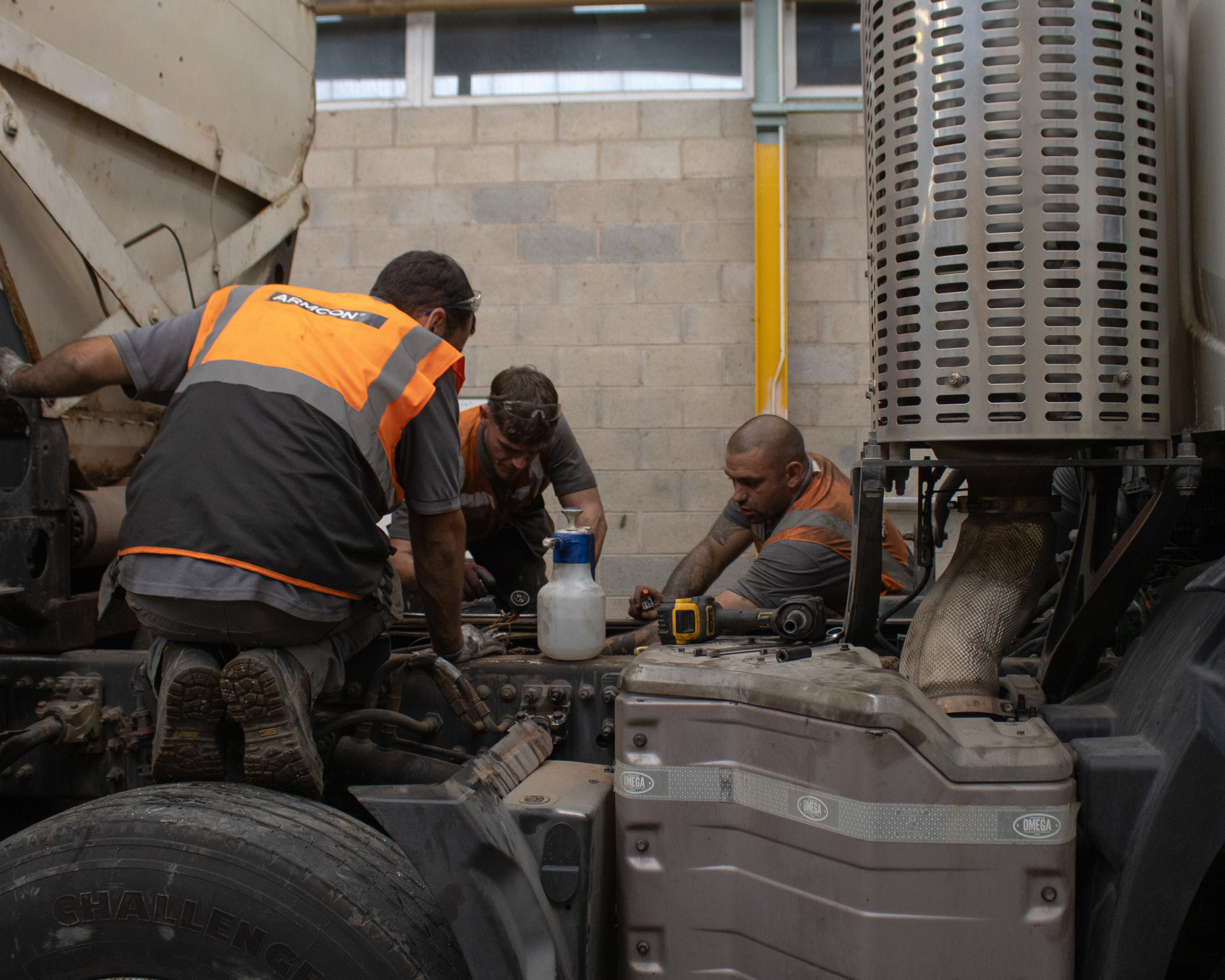
Maintain the systems responsible for controlled material delivery and keep the mixer correctly set up for production.
Explore testing services designed to support the assessment of concrete, materials and production performance.
Explore the ProAll volumetric mixer range supplied and supported by Armcon across the UK.
EQUIPMENT · CALIBRATION · SERVICE · TESTING · TECHNICAL SUPPORT